About this project


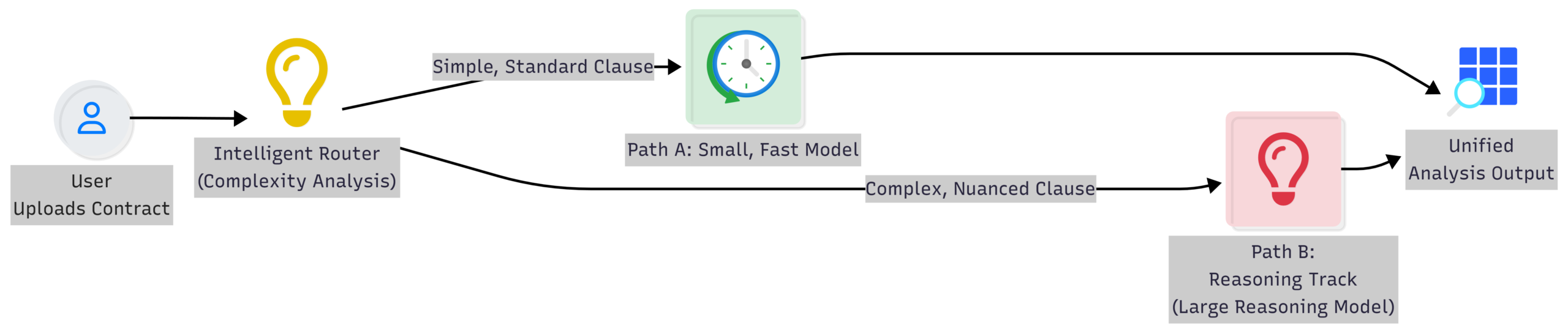
This project develops and evaluates a high-performance, AI-powered engine for the automated analysis and red-flag detection of legal documents, including public tenders and contracts. Using PDF documents and dynamic JSON rulebooks, the system is benchmarked by comparing multiple information extraction architectures, including Retrieval-Augmented Generation (RAG) and full-context agent-based reasoning. The research measures accuracy across different foundational LLM models (e.g., Llama 3, Mistral) and evaluates the impact of advanced prompt design on analytical quality. A key deliverable is determining the best method for verifiability by linking AI-generated information to its source text. This hybrid, data-driven approach enables the creation of a trustworthy legal review tool and establishes a continuous learning algorithm, allowing human experts to correct and improve the system’s accuracy over time. This project also involves performance and result benchmarking among LLMs and how they interpret legal and contract-related data.
Discover the team behind this project


Aditya Mukhopadhyay
Aditya MukhopadhyayAI Intern - NLP
Bioinformatics – Data Science – Data Analytics – Computer Vision – Deepfake Detection


Published On: 26 January 2026Categories:

Related projects

  • EnergyAgent is an LLM-powered conversational assistant for household energy monitoring and efficiency. It enables natural-language queries over smart-meter data and provides strictly factual responses derived from recorded consumption. User questions are translated into explicit calculation steps processed by an analytics engine, ensuring numerical accuracy. The system then converts these results into clear, actionable insights to help users better understand and optimize their energy usage.

  • This project leverages Physics-Informed Neural Networks (PINNs) to model and forecast the thermal performance of power transformers in the Belgian transmission network. By combining physical thermal equations with historical operational and environmental data, the approach enables accurate temperature estimation, early detection of overheating risks, and supports data-driven predictive maintenance strategies.

  • The project explores how AI models may prioritize certain information over others in corporate scenarios. From favoring recent data to reinforcing specific perspectives, we analyze these biases to promote more transparent and fair AI systems. Our partners are DTSC and UAntwerpen

  • EnergyAgent is an LLM-powered conversational assistant for household energy monitoring and efficiency. It enables natural-language queries over smart-meter data and provides strictly factual responses derived from recorded consumption. User questions are translated into explicit calculation steps processed by an analytics engine, ensuring numerical accuracy. The system then converts these results into clear, actionable insights to help users better understand and optimize their energy usage.

  • This project leverages Physics-Informed Neural Networks (PINNs) to model and forecast the thermal performance of power transformers in the Belgian transmission network. By combining physical thermal equations with historical operational and environmental data, the approach enables accurate temperature estimation, early detection of overheating risks, and supports data-driven predictive maintenance strategies.